Greenhouse cultivation benches are pivotal in modern agriculture, defying traditional space and resource constraints to present a solution for optimal growth of diverse plants, from common vegetables to high-value medicinal crops.
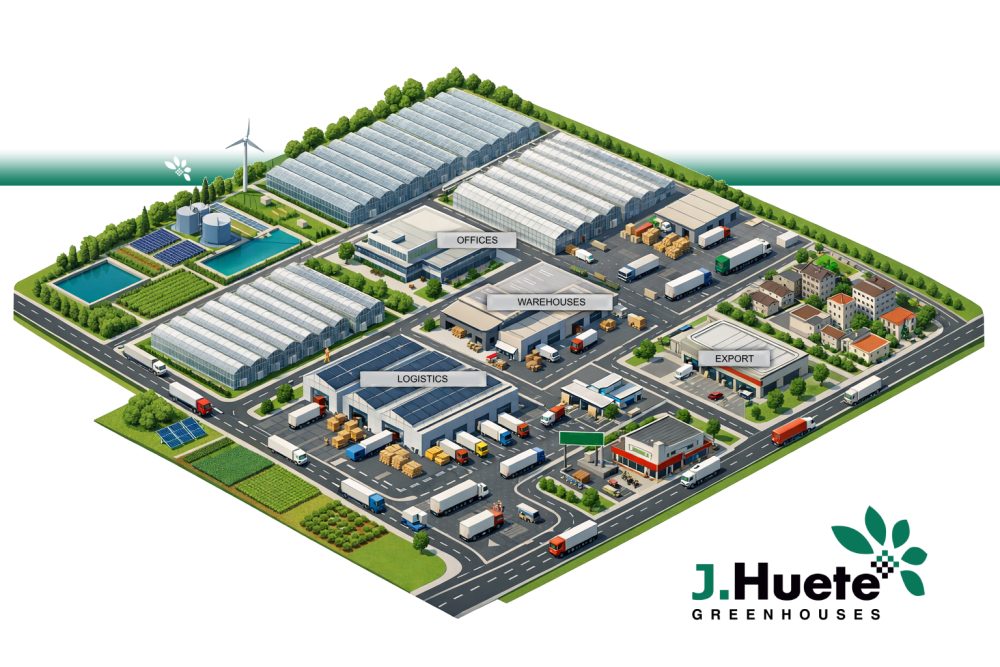
J. Huete Greenhouses is one of the most important greenhouse designers and manufacturers in Europe. Having worked in many countries – around 40 – they are also experts in equipment, and within this equipment, in cultivation benches.
Greenhouse growing benches are presented as a paradigm shift, providing multifaceted benefits that go beyond conventional agriculture. “Space optimization is a fundamental pillar, allowing more efficient use and, therefore, greater production in a limited space. This compact approach not only boosts productivity, but also opens up new opportunities for crop diversification, providing farmers the freedom to explore a variety of options”, says Javier Huete Lázaro, director of business development and operations of the company.
Pest control, another essential benefit, becomes more tangible and manageable on growing benches. Elevating crops reduces exposure to soil-borne pests and diseases, which, combined with integrated pest management systems, provides an additional level of protection. Furthermore, “ease of handling becomes a crucial advantage, as the benches allow for more comfortable and ergonomic access for tasks such as sowing, watering and harvesting. This increase in operational efficiency not only reduces the physical burden on farmers but also improves precision at every stage of the farming process”, says Javier.
Crops that improve their production with cultivation benches

Lettuce, one of the staple foods in the global diet, experiences significant improvements when grown on benches inside greenhouses. “The key advantage lies in the precise control of growing conditions, from the exact amount of water to the specific lighting each plant receives”, Javier says. “This millimeter control not only leads to more consistent production, but also allows for a faster growing cycle, meaning farmers can harvest more lettuce in less time. Additionally, elevating benches makes picking easier, reducing physical strain on workers and improving operational efficiency”.
The cultivation of ornamental plants benefits greatly from greenhouse benches, as they provide a controlled environment ideal for flowering and aesthetic development. Javier: “Elevating benches provides a more effective visual display, allowing ornamental plants to stand out and be more accessible for display”. Additionally, precise management of environmental conditions contributes to overall plant health, promoting a broader range of colors, sizes and shapes that are essential to the ornamental plant market.
“Growing aromatic herbs on benches not only boosts production efficiency, but also enhances the quality and concentration of aromatic compounds. By raising benches, the risk of soil contamination is minimized, which is crucial for herbs that are valued for their distinctive flavors”, says Javier. Additionally, the ability to precisely adjust growing conditions allows growers to customize the flavor and aroma profile of herbs, meeting high-quality standards in the culinary and medicinal products industry.
Grow benches become ideal allies for growing microgreens, where space is especially valuable. By stacking the trays on benches, compact and efficient distribution is achieved, allowing growers to maximize the amount of microgreens produced in a limited area. Furthermore, the ease of access at different levels facilitates the monitoring and care of these delicate crops, contributing to constant, high-quality production.
Special Considerations for Growing Medical Cannabis on Benches
Growing medicinal cannabis on benches provides unprecedented control over growing conditions, which is essential to ensure consistency in cannabinoid and terpene profiles. Amir Abbas Khan, Medical Cannabis Project Manager with J. Huete Greenhouses, says that “elevating the benches makes it easier to manage temperature and humidity, critical factors for the health and potency of cannabis plants. Additionally, this elevated layout reduces the risk of soil diseases and simplifies maintenance tasks, ensuring an environment conducive to the production of high-quality medicinal cannabis”.
Amir adds that “propagation benches are usually used in medicinal crops in order to give rise to rooting of clones to achieve a higher percentage of proliferation thanks to the development of the root system under conditions of adequate temperature and relative humidity, since These benches have plastic curtains and a humidification system”.
On the other hand, it is also possible to use these benches for a pre-vegetative or acclimatization phase in which an increase in the volume of the roots and their growth is sought, thus improving the effectiveness of the use of plant material in subsequent phases, starting from seeds or clones, which would have previously germinated or propagated under controlled conditions of a germination and/or propagation chamber.


Another place where crop benches are used are seedbeds. “The design of the seedbed benches takes into account the need for aeration, drainage management, as well as the size of the plants that affects the density and volume of the plants according to the different phases of the plants or the different parts of the plant. hotbed in question”, Javier says.
For this reason, a grid bottom is usually chosen, placing a drain under the benches themselves, or sliding benches are chosen with the purpose of increasing the number of seedlings obtained at the end of the process.
As for irrigation, there are several options, although the most common is usually sprinkling or manual irrigation if the seedbed area is small.
Boosting performance with automated irrigation systems and climate control

The incorporation of automated irrigation systems is a key element that significantly enhances the yield of table crops. Precision water delivery ensures that each plant receives the exact amount it needs, avoiding both overwatering and underwatering. This is especially beneficial for crops such as lettuce and herbs, where water needs can vary significantly. Additionally, irrigation automation frees farmers from intensive manual tasks, allowing them to focus on other crucial aspects of crop management.
“Climate control is another essential aspect to maximize performance on cultivation benches. The ability to adjust and closely monitor factors such as temperature, humidity and ventilation directly contributes to ideal growing conditions. In closed environments such as greenhouses, these climate control systems ensure a perfect balance for each type of crop”, adds Javier. This is especially relevant in regions with extreme climates, where benches offer an additional layer of protection and stability for crops in the face of challenging environmental conditions.
In short, growing on benches under greenhouses not only represents a significant evolution in the way we approach agriculture, but also “unlocks a number of fundamental benefits for productivity and sustainability. The versatility of this method, evidenced by the successful cultivation of lettuce, ornamental plants, aromatic herbs, microgreens and medicinal cannabis, underlines its ability to adapt to various agricultural needs”, says Javier to finish.
From space optimization to effective pest control, grow benches offer a comprehensive approach that not only boosts yield but also simplifies farm management. J. Huete Greenhouses is an expert in manufacturing growing tables for large greenhouses around the world, capable of customizing their characteristics so that they are as precise as possible in their purpose.