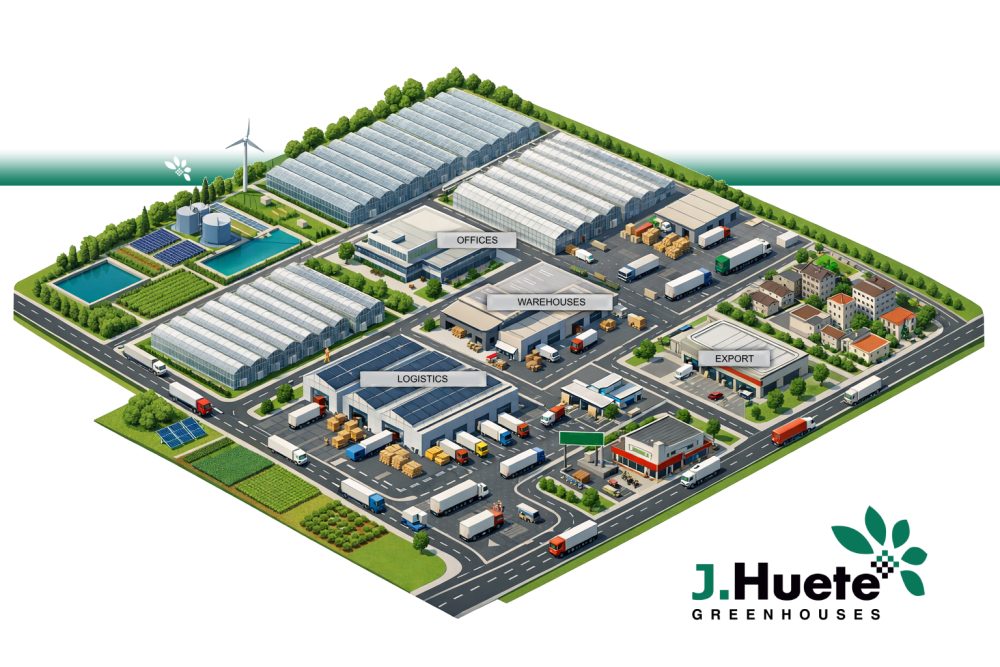
Greenhouse engineering, manufacturing and project execution
A professional greenhouse project is not defined by the structure alone.
Its performance depends on how the structure, local climate, crop requirements, irrigation, climate systems, automation, logistics and operating strategy are coordinated from the beginning.
J. Huete Greenhouses develops greenhouse projects for professional growers, horticultural companies, investors, seed companies and research organisations. Depending on the required scope, our team can participate from the initial feasibility study and engineering phase through manufacturing, civil works, installation, equipment integration and commissioning.
Every project begins with the same principle: the greenhouse must be designed around the crop, the location and the client’s production objectives—not selected as a standard product and adapted afterwards.
What does a professional greenhouse project include?
The scope of a greenhouse project can vary from the supply of a structure to the delivery of a fully integrated production facility.
A project may include:
- Preliminary feasibility analysis
- Agronomic and climatic assessment
- Conceptual and detailed engineering
- Structural calculations
- Greenhouse structure and covering
- Civil works and foundations
- Drainage and stormwater management
- Manufacturing
- International logistics
- Greenhouse assembly
- Climate-control systems
- Irrigation and fertigation
- Water treatment
- Heating and cooling
- Screening systems
- Supplemental lighting
- Electrical installations
- Sensors and automation
- Technical areas and packing facilities
- Commissioning and operational testing
- Training and technical support
The final scope should be defined according to the real requirements of the project. Not every facility needs the maximum level of technology, but every installed system must respond to a clear climatic, agronomic or operational objective.
One project strategy before selecting the technology
A greenhouse project should not begin by choosing a catalogue model.
Before defining the structure or equipment, the project team must understand:
- What crop will be produced
- Where the project will be located
- How the external climate behaves throughout the year
- What production calendar is required
- What yield and quality objectives have been established
- Which market the produce will serve
- What level of environmental control is necessary
- What water and energy resources are available
- What operational capacity the client has
- Whether future expansion is expected
These variables determine the most appropriate greenhouse type, height, span, ventilation capacity, covering, irrigation system and climate equipment.
A design that works in one country, climate or crop cannot simply be replicated in another location without technical adaptation.
Our greenhouse project process
1. Initial consultation and project qualification
The first phase is used to establish whether the project is technically and commercially defined enough to begin engineering.
We collect essential information about:
- Location
- Crop
- Surface area
- Production objective
- Available land
- Water resources
- Energy availability
- Required technology
- Estimated schedule
- Expected project scope
When this information is incomplete, the initial phase helps identify the studies and decisions that are still required.
2. Site, climate and agronomic assessment
The greenhouse must respond to its environment.
The assessment may consider:
- Maximum and minimum temperatures
- Relative humidity
- Solar radiation
- Prevailing wind
- Maximum wind loads
- Rainfall intensity
- Snow loads
- Water quality and availability
- Topography
- Soil conditions
- Access and logistics
- Crop physiology
- Production calendar
This analysis identifies the limiting factors that the greenhouse and its equipment must manage.
3. Conceptual engineering
Conceptual engineering defines the overall project strategy.
At this stage, the technical team evaluates:
- Greenhouse typology
- Structural dimensions
- Orientation and site layout
- Ventilation strategy
- Covering material
- Crop layout
- Irrigation concept
- Climate systems
- Technical and service areas
- Internal and external logistics
- Possibilities for future expansion
The purpose is to align the production concept, technical scope and investment level before detailed engineering begins.
4. Detailed engineering
Once the project concept has been approved, each system is calculated and coordinated.
Detailed engineering may include:
- Structural calculations
- Foundation plans
- Civil works drawings
- Drainage calculations
- Ventilation area
- Heating capacity
- Cooling requirements
- Screen configuration
- Irrigation sectors
- Fertigation capacity
- Water-treatment requirements
- Electrical distribution
- Sensor positioning
- Automation architecture
- Equipment layouts
- Bill of materials
- Installation documentation
Coordination at this stage reduces conflicts between contractors and prevents technical decisions from being made independently on site.
5. Project scope and commercial proposal
The proposal must clearly identify what is included, excluded and dependent on third parties.
A professional proposal should define:
- Technical scope
- Materials and specifications
- Equipment
- Services
- Client responsibilities
- Civil works responsibilities
- Installation scope
- Logistics
- Schedule
- Testing and commissioning
- Documentation
- Warranty conditions
This clarity is essential for comparing proposals correctly and avoiding cost deviations during execution.
6. Manufacturing and quality control
J. Huete Greenhouses manufactures structural components for its greenhouse projects and coordinates the supply of the equipment included in the approved scope.
Manufacturing must follow the project drawings and structural specifications rather than a generic configuration.
Quality control should verify:
- Dimensions
- Materials
- Coatings
- Welding
- Drilling and machining
- Component identification
- Packing
- Traceability
- Compliance with project documentation
Manufacturing and engineering must remain coordinated so that components arrive on site ready for assembly.
7. Logistics and delivery planning
International greenhouse projects require detailed logistics planning.
The process may include:
- Packaging by construction phase
- Container planning
- Loading sequences
- Export documentation
- Transport coordination
- Delivery schedules
- On-site unloading requirements
- Storage instructions
- Component identification
Poorly coordinated logistics can create delays even when the structure itself has been manufactured correctly.
8. Civil works and foundations
The greenhouse structure depends on the site preparation and foundations beneath it.
Depending on the project, civil works may include:
- Land preparation
- Levelling
- Earthworks
- Foundations
- Drainage
- Stormwater management
- Access roads
- Service trenches
- Reservoirs
- Technical buildings
- Packing and conditioning areas
- Perimeter infrastructure
Civil works must be coordinated with the structural and equipment drawings from the beginning. Changes made after construction starts can affect cost, schedule and system integration.
9. Assembly and site management
The installation phase transforms the engineering documentation into a functioning facility.
The scope may include:
- Structural assembly
- Covering installation
- Roof and side ventilation
- Screens
- Gutters and drainage
- Heating
- Cooling
- Irrigation
- Fertigation
- Electrical systems
- Sensors
- Climate computers
- Technical rooms
Site management must control sequencing, safety, quality and coordination between the different trades.
A greenhouse cannot be considered complete when the structure is standing. The project is complete when the systems work together according to the approved design.
10. Commissioning and validation
Before production begins, the installed systems should be tested and validated.
Commissioning may include:
- Ventilation movement tests
- Screen operation
- Heating tests
- Cooling tests
- Irrigation pressure and uniformity
- Fertigation calibration
- Water-treatment operation
- Sensor verification
- Alarm testing
- Automation sequences
- Electrical checks
- Drainage testing
Any deviations must be identified before the crop is introduced.
11. Training and operational handover
A technically advanced facility only creates value when the operating team understands how to use it.
The handover may include:
- Operating manuals
- Maintenance instructions
- System training
- Climate-control guidance
- Irrigation and fertigation procedures
- Alarm management
- Spare-parts recommendations
- Preventive-maintenance schedules
The purpose is to ensure that the client receives an operational production tool, not simply installed equipment.
Greenhouse structure, equipment and automation as one system
One of the main risks in greenhouse projects is treating each component as an independent purchase.
The greenhouse structure affects:
- Internal volume
- Air exchange
- Temperature distribution
- Humidity distribution
- Screen configuration
- Crop layout
- Equipment loads
The covering affects:
- Light transmission
- Thermal behaviour
- Condensation
- Durability
- Energy demand
The irrigation and climate systems affect crop transpiration, root-zone conditions, nutrient uptake and production uniformity.
Automation connects these systems through sensors, control logic and operating strategies.
For this reason, structural engineering, climate design, irrigation and automation should be coordinated under the same project strategy
Greenhouse projects for different crops
The crop determines many of the project’s engineering and operational decisions.
The crop name alone is not sufficient to define the greenhouse. Variety, growing method, production calendar and market requirements must also be considered.
Tomato, pepper, cucumber and aubergine
High-wire vegetable crops may require tall structures, stable ventilation, crop-support systems, heating, CO₂ distribution, substrate growing systems and drainage management.
Berries
Strawberry, raspberry and blueberry projects may use tunnels, multitunnel greenhouses, raised growing systems, substrate containers, rain protection and crop-specific ventilation.
Leafy greens and herbs
These projects may incorporate hydroponic systems, mobile gutters, benches, cooling, lighting and high planting density.
Seed production and plant breeding
Research and seed-company projects may require isolated compartments, insect exclusion, precise climate zones, blackout systems, lighting, benches and strict phytosanitary separation.
Flowers and ornamental crops
Flower projects may require specific temperature, humidity, light, irrigation and logistics strategies.
Medicinal and high-value crops
Projects for medicinal or highly regulated crops may require high levels of climate control, filtration, access control, traceability and compartmentalisation.
International greenhouse projects adapted to local conditions
J. Huete Greenhouses develops projects for different climates, production systems and international markets.
Project design may need to respond to:
- Hot and arid climates
- Mediterranean climates
- Humid tropical conditions
- Cold continental climates
- Strong winds
- Heavy rainfall
- Snow loads
- Limited water availability
- Poor water quality
- Restricted energy supply
- Complex import and logistics conditions
Local adaptation is essential. The same structure and equipment specification should not be repeated automatically across different countries.
Selected greenhouse projects
Organic vegetable production in Spain
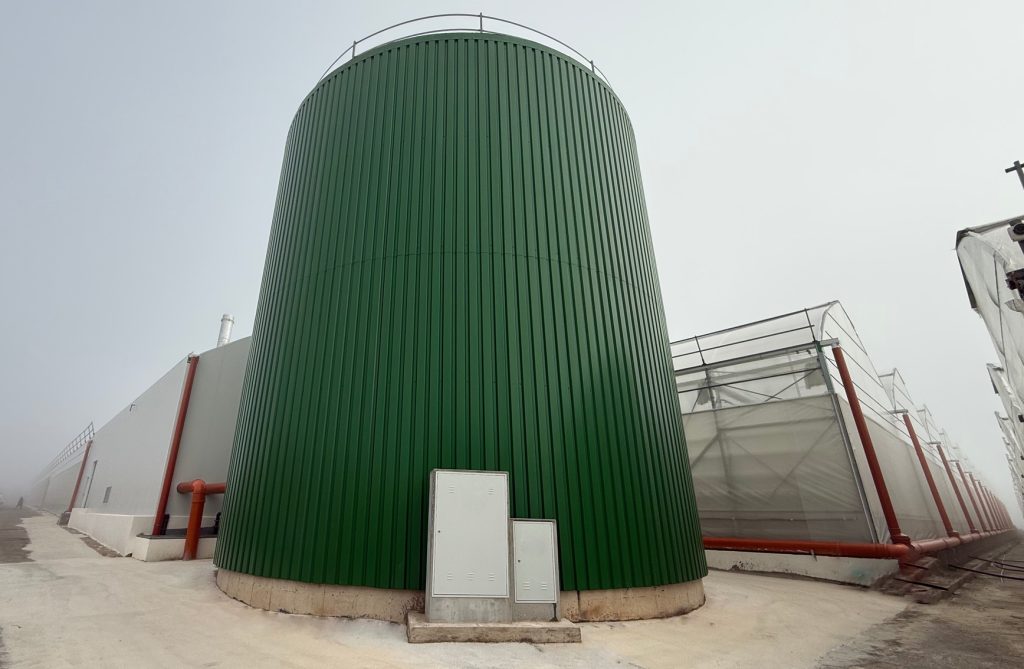
For a professional grower linked to the BioSabor cooperative, J. Huete developed greenhouse installations that evolved over time to incorporate butterfly roof ventilation, thermal screens, hot-water heating and double plastic covering.
High-technology crop project in Portugal
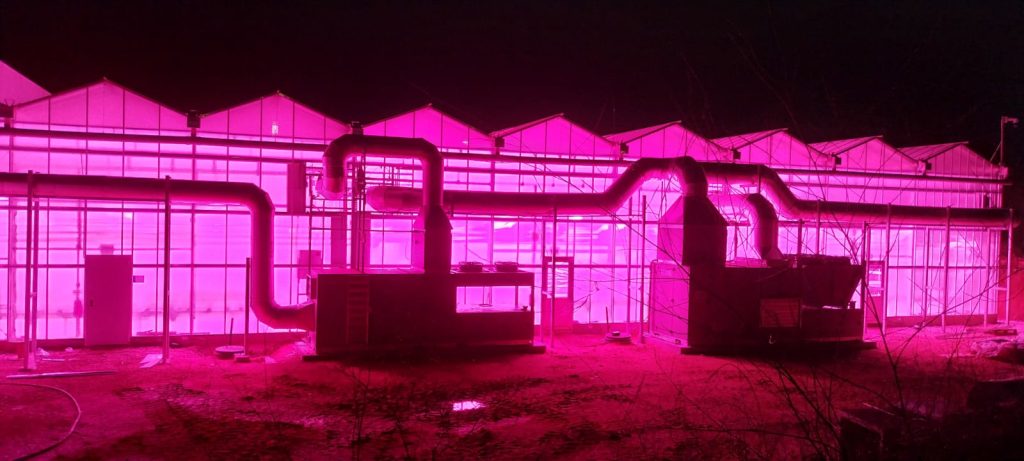
The project incorporated positive pressure, shading screens, perimeter ventilation, insect screens, water heating, climate control, automatic irrigation and artificial lighting.
Tomato greenhouse project in Mexico
J. Huete Greenhouses supported the development and successive expansion of a tomato project, including greenhouse structures, roof ventilation, heating, fertigation and a packing area.

Strawberry project in the United Kingdom
The project incorporated a reinforced structure, double roof ventilation, inflated double-plastic covering, crop gutters, air circulation and heating systems for professional strawberry production.

Why work with a specialised greenhouse project company?
A specialised project company does more than supply materials.
Its role is to coordinate the technical decisions that determine whether the facility can meet its production objectives.
The project partner should be capable of:
- Understanding the crop and production strategy
- Interpreting local climate data
- Developing engineering documentation
- Calculating the structure
- Manufacturing project-specific components
- Coordinating equipment
- Planning logistics
- Supervising installation
- Testing the systems
- Supporting project handover
The main value is coordination.
When the structure, civil works, irrigation, climate systems and automation are designed independently, interfaces and responsibilities can become unclear. Integrated project management reduces this risk.
Frequently asked questions about greenhouse projects
What information is needed to start a greenhouse project?
The initial information normally includes the project location, crop, approximate surface area, production objective, available land, water and energy resources, required technology and expected schedule.
What is the minimum recommended project size?
The appropriate size depends on the crop, technology, market and business model. J. Huete Greenhouses is primarily oriented towards professional and commercial projects rather than small domestic greenhouses.
How long does a greenhouse project take?
The schedule depends on engineering complexity, surface area, civil works, manufacturing, equipment, logistics, permits and local installation conditions. A reliable timeline can only be prepared after defining the scope.
Can the project be developed in phases?
Yes. Many professional projects are planned in phases so that infrastructure, water systems, technical areas and site layout can support future expansion.
Does J. Huete Greenhouses provide only the structure?
The possible scope can range from engineering and structural supply to equipment, installation and turnkey execution, depending on the project and location.
Does a greenhouse project include civil works?
Civil works can be included or coordinated within the project scope. Responsibilities must be defined clearly in the proposal because local regulations and site conditions vary.
Can an existing greenhouse be expanded or modernised?
Yes, subject to a technical assessment of the existing structure, foundations, dimensions and capacity to support the proposed equipment.
What type of greenhouse is best for a project?
There is no single best type. The choice between plastic greenhouse, glasshouse, multitunnel, macrotunnel or another configuration depends on climate, crop, production objectives, investment and operational requirements.
Does J. Huete Greenhouses work internationally?
J. Huete develops international greenhouse projects and adapts engineering, manufacturing, logistics and installation strategies to the conditions of each market.
How is the greenhouse project budget calculated?
The budget depends on surface area, structure, covering, civil works, climate systems, irrigation, automation, logistics and installation. A meaningful proposal requires a defined scope and basic project information.
Start the technical assessment of your greenhouse project
A professional proposal begins with accurate project information.
Tell us where the project will be located, what crop you plan to grow, the approximate area and the systems you expect to include. Our team will review the initial requirements and determine the next technical step.