


Engineering, construction, equipment and commissioning
Turnkey Greenhouse Projects with One Integrated Partner
A turnkey greenhouse project places the engineering, manufacturing, construction, equipment integration and commissioning of the facility under one coordinated responsibility.
Instead of managing separate structural, civil, irrigation, climate-control, electrical and automation contractors, the client works with one project partner responsible for coordinating the complete scope.
J. Huete Greenhouses develops turnkey greenhouse projects for professional growers, agricultural companies, seed producers, investors and research organisations. Our work is primarily focused on large-scale and technologically advanced facilities designed around the crop, location and production objectives.
What is a turnkey greenhouse project?
A turnkey greenhouse project is an integrated delivery model in which one principal contractor coordinates the complete facility from the agreed engineering stage to operational handover.
Depending on the contract, the scope may include:
- Site and climate assessment
- Conceptual and detailed engineering
- Structural calculations
- Greenhouse manufacturing
- Civil works
- Foundations
- Structural assembly
- Covering systems
- Climate-control equipment
- Irrigation and fertigation
- Water treatment
- Electrical installations
- Sensors and automation
- Technical rooms
- Testing and commissioning
- Documentation and training
The defining characteristic is not simply that many systems are supplied. It is that those systems are coordinated under one project scope, one programme and one allocation of responsibilities.
Turnkey greenhouse project vs partial supply
| Project area | Partial supply | Turnkey project |
|---|---|---|
| Engineering | Divided between several parties | Coordinated under one project strategy |
| Greenhouse structure | Supplied as an independent package | Integrated with civil works and equipment |
| Civil works | Managed separately by the client | Included or coordinated within the defined scope |
| Climate systems | Selected by different suppliers | Calculated and coordinated with the greenhouse |
| Irrigation and fertigation | Separate hydraulic contract | Integrated with crop and water strategy |
| Automation | Connected after equipment selection | Defined as part of the control architecture |
| Installation | Several independent installers | Coordinated installation programme |
| Interfaces | Managed primarily by the client | Managed by the principal project partner |
| Commissioning | Often divided by equipment supplier | Coordinated validation of the complete facility |
| Responsibility | Distributed | Defined through an integrated responsibility matrix |
Partial supply can be suitable when the client already has an experienced engineering and construction team.
A turnkey model is particularly valuable when the project contains multiple technical systems, international suppliers, demanding schedules or limited internal capacity to coordinate all interfaces.
What risks does a turnkey greenhouse model reduce?
Unclear interfaces between contractors
When the civil contractor, greenhouse supplier, irrigation company, electrical installer and automation provider work under separate scopes, omissions can appear between contracts.
An integrated project defines who is responsible for each interface before construction begins.
Incompatible engineering decisions
The structure, foundations, screens, heating, irrigation and electrical systems create loads and spatial requirements that affect one another.
Coordinated engineering reduces the risk of equipment being selected after the structure or civil works have already been fixed.
Programme delays
A delay in foundations, manufacturing, shipping or technical-room construction can affect all subsequent activities.
A consolidated programme establishes dependencies, milestones and required client decisions.
Budget fragmentation
Separate quotations can omit integration costs, auxiliary equipment, installation interfaces or commissioning activities.
A turnkey proposal provides a more complete view of the agreed project scope and exclusions.
Disputed responsibility during commissioning
When a system does not perform as expected, several independent contractors may attribute the problem to another package.
Integrated commissioning provides a coordinated process for identifying and correcting deviations.
Operational handover without sufficient documentation
A turnkey project should conclude with drawings, manuals, test reports, training and a formal handover process.
- Greater cost visibility after the technical scope has been defined
- A coordinated programme with fewer interfaces between suppliers
- Risk mitigation
- Scalability and flexibility

Download more information about our turnkey greenhouse projects.
Turnkey greenhouses
Comprehensive Services
In our turnkey greenhouse projects, every detail is covered so your only concern is production.
- Civil works and foundations: We prepare the site with geotechnical studies and auxiliary structures such as drainage, access roads, and foundation bases, ensuring maximum stability and durability for your greenhouse from day one.
- Civil, electrical, and air conditioning engineering: We integrate state-of-the-art HVAC systems, high-precision irrigation and fertigation networks, and IoT solutions to monitor and automate every climatic and nutritional parameter. This ensures an ideal microclimate and efficient use of all resources.
- Agronomic consulting and training: Our team of agronomists advises on optimal crop selection, rotation planning, and nutrient management, providing practical training so your team can apply the best protected cultivation techniques.
- Financing and subsidies: If possible, we can advise on the management of credit lines, leasing and European subsidies, facilitating your access to public aid and reducing the initial investment needed for your project.
- Startup and validation: We perform exhaustive operational tests and validate irrigation, climate control, and fertigation parameters to ensure your turnkey greenhouse starts up under optimal conditions, guaranteeing immediate and consistent performance.

What can be included in J. Huete Greenhouses' turnkey scope?
1. Preliminary assessment
- Project qualification
- Crop and production objectives
- Climate review
- Site constraints
- Water and energy availability
- Initial scope definition
2. Engineering
- Conceptual engineering
- Detailed engineering
- Structural calculations
- Civil drawings
- Hydraulic design
- Electrical architecture
- Equipment layouts
- Automation strategy
3. Manufacturing
- Greenhouse structural components
- Project-specific fabrication
- Material traceability
- Quality control
- Packing and identification
4. Civil works
- Site preparation
- Earthworks
- Foundations
- Drainage
- Service trenches
- Reservoirs
- Technical buildings
- Internal roads, where included
5. Construction and installation
- Greenhouse assembly
- Covering
- Ventilation
- Screens
- Heating and cooling
- Irrigation
- Electrical systems
- Automation
6. Technical equipment
- Climate control
- Irrigation and fertigation
- Water treatment
- Drainage recovery
- Supplemental lighting
- Climate computers
- Sensors
- CO₂ systems, when required
7. Commissioning
- Mechanical tests
- Hydraulic tests
- Electrical verification
- Sensor calibration
- Automation sequences
- Alarm tests
- Operating validation
8. Handover
- As-built documentation
- Manuals
- Training
- Maintenance recommendations
- Spare-parts lists
- Warranty documentation
The exact scope varies by country, project and contract. Local permits, utilities, land acquisition and certain civil or regulatory services may remain under the client’s responsibility unless expressly included.
Clear responsibilities from the beginning
A turnkey contract must define more than the equipment supplied. It must establish who is responsible for information, approvals, permits, site conditions, utilities, execution and validation.
**This is an approximation. Only an example. Don’t take it as set in stone. Every project, every moment and every situation are completely different.
| Responsibility | J. Huete Greenhouses | Client | Local partner / authority |
|---|---|---|---|
| Project engineering | According to scope | Approvals and required inputs | Local review when required |
| Climate and agronomic data | Analysis | Supply of available information | External studies if required |
| Land ownership and access | — | Responsible | — |
| Permits and licences | Technical support if included | Normally responsible | Approval |
| Geotechnical study | Can be coordinated | Provides site access | Local specialist |
| Civil works | Included or coordinated as contracted | Local obligations and approvals | Local contractor if applicable |
| Greenhouse manufacturing | Responsible | — | — |
| Utilities | Connection requirements | Availability and contracts | Utility provider |
| Installation | According to scope | Site access and agreed facilities | Local support if contracted |
| Commissioning | Responsible for included systems | Operating team participation | Specialist suppliers if required |
| Crop management | Training/support if contracted | Responsible | Agronomic adviser if applicable |
The final responsibility matrix is defined in the commercial and technical proposal.
How long does a turnkey greenhouse project take?
The programme depends on project size, engineering complexity, permits, civil works, equipment, manufacturing capacity, shipping and local installation conditions.
A professional schedule is normally divided into:
1. Project definition and engineering
2. Technical approvals
3. Manufacturing and procurement
4. Civil works
5. Logistics
6. Greenhouse assembly
7. Equipment installation
8. Testing and commissioning
9. Operational handover
Several activities can overlap, but the programme cannot be defined reliably until the scope, location and client responsibilities are known.
CAPEX and OPEX visibility in a turnkey project
A turnkey model does not automatically make a greenhouse less expensive.
Its financial advantage lies in providing a more coordinated view of the complete facility, including interfaces that can remain hidden when packages are quoted independently.
The technical proposal should identify:
– Included capital expenditure
– Excluded works and services
– Client-supplied infrastructure
– Installation requirements
– Energy demand assumptions
– Maintenance requirements
– Replacement cycles
– Expansion provisions
– Commissioning and training
– Potential operating-cost implications
This allows the client to compare complete project scopes rather than comparing only the price of the greenhouse structure.
Systems that can be integrated into a turnkey greenhouse
The equipment included in a turnkey project depends on the crop, climate, water, energy, production calendar and required level of control.
Possible systems include:
- Roof and side ventilation
- Thermal and shading screens
- Heating
- Recirculation
- Climate computers
- Evaporative cooling
- Fogging
- Air circulation
- Supplemental lighting
- Remote supervision
- CO₂ distribution
- Irrigation and fertigation
- Filtration
- Electrical distribution
- Reverse osmosis
- Water disinfection
- Drainage collection
- Sensors
These systems should not be presented as a standard package. Each one must respond to a defined technical requirement and must be coordinated with the rest of the facility.
Turnkey greenhouses: success stories

15-hectare turnkey greenhouse project for hydroponic tomato production
The project demonstrates the company’s capacity to coordinate a multi-hectare facility combining structure, production systems and technical execution.
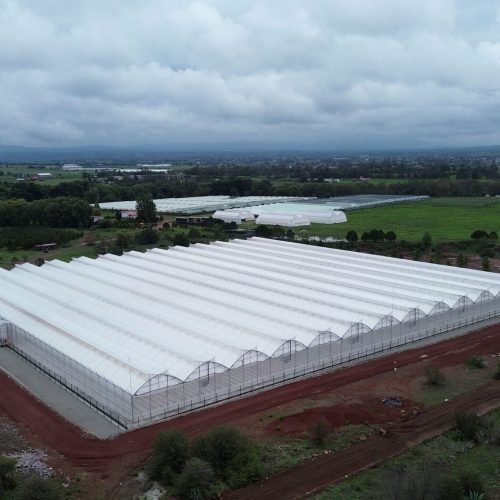
1.5-hectare high-tech greenhouse for hydroponic strawberry production
This project in Mexico combined a high-technology greenhouse with suspended growing systems for professional hydroponic strawberry production.
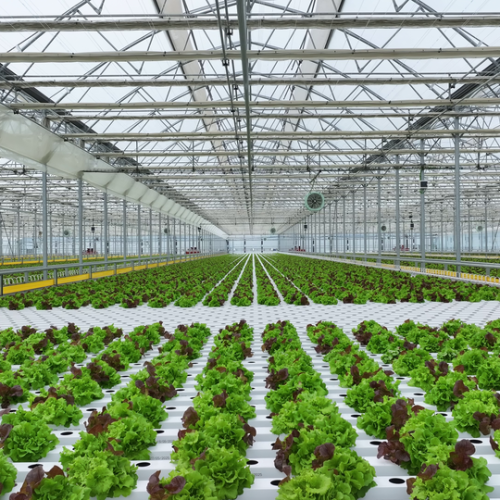
High-tech greenhouse for automated hydroponic lettuce production
Technified greenhouse with mobile gutter system for intensive lettuce cultivation in Japan.
Our clients endorse these results: from large producers in Australia to cooperatives in Europe and nurseries in Central America. With turnkey greenhouses, J. Huete Greenhouses guarantees efficiency, and sustainability, demonstrating our experience as a national and international benchmark in protected cultivation projects.
The purpose of an integrated project is to align the facility with the client’s production and operational objectives. Final performance depends on the crop, climate, market, management and operating conditions.
Commissioning, documentation and post-handover support
The end of construction is not the end of a turnkey project. The agreed handover scope may include:
– System testing
– Commissioning reports
– Operating manuals
– As-built documentation
– Staff training
– Preventive-maintenance recommendations
– Spare-parts lists
– Warranty documentation
– Remote or on-site technical support under agreed conditions
The exact support level, response times and maintenance services are defined contractually for each project.
Request a preliminary turnkey project assessment
Provide the main technical and commercial information about your project. Our team will assess the available data and identify the next engineering step.
Our team will review the project information and determine the technical data required for the next stage.