
Greenhouse Projects in Saudi Arabia for Large-Scale Agricultural Production
Engineering, manufacturing and execution of professional greenhouse facilities
If you are planning a greenhouse in Saudi Arabia, contact us: we specialize in the design and manufacture of large-scale greenhouses.
Developing a commercial greenhouse project in Saudi Arabia requires more than supplying a standard structure.
High temperatures, intense solar radiation, limited water resources, water quality, energy availability and demanding production targets must be considered before the greenhouse type and equipment are selected.
J. Huete Greenhouses designs, manufactures and executes professional greenhouse projects for agricultural companies, investors and food-production groups.
Our projects can integrate the greenhouse structure, climate-control systems, irrigation and fertigation, water treatment, automation, electrical installations, technical areas and project commissioning under one coordinated engineering strategy.
We are primarily oriented towards large-scale and technologically advanced agricultural projects.

A greenhouse project designed for Saudi conditions

A greenhouse that performs correctly in northern Europe or the Mediterranean cannot simply be replicated in Saudi Arabia.
The project must be adapted to the location, crop, production calendar and available resources. Before defining the structure, we assess factors such as:
- Maximum and minimum external temperatures
- Solar radiation
- Relative humidity
- Wind conditions
- Sand and dust exposure
- Water availability
- Irrigation water quality
- Energy availability and cost
- Required production months
- Crop transpiration
- Target yield and quality
- Operational capacity
- Possibilities for future expansion
These factors determine the greenhouse geometry, internal volume, ventilation capacity, covering, shading strategy, cooling requirements, irrigation system and level of automation.
The objective is not to install the maximum amount of technology.
The objective is to install the technology that the crop and the project actually require.
Large-scale greenhouse projects for professional investors and growers
J. Huete Greenhouses works with professional agricultural projects rather than domestic or small garden greenhouses.
Our solutions are intended for:
- Agricultural investment companies
- Large growers
- Fresh-produce companies
- Food-security projects
- Government-supported agricultural initiatives
- Investment funds and family offices
- Seed companies
- Research centres
- Retail and food-supply groups
- Companies developing new agricultural production hubs
Projects may begin with an initial production module and be designed for expansion into multiple phases.
The master plan can anticipate future greenhouse blocks, reservoirs, technical buildings, energy systems, internal roads, packing areas and logistics infrastructure.
What can J. Huete include in a greenhouse project?
The scope can be adapted to the client’s requirements and may include:
- Feasibility support
- Climate and site assessment
- Conceptual engineering
- Detailed engineering
- Structural calculations
- Greenhouse manufacturing
- Foundations and civil works coordination
- International logistics
- Greenhouse assembly
- Covering systems
- Ventilation
- Shading and thermal screens
- Cooling and humidification
- Heating when required
- Air circulation
- Irrigation and fertigation
- Water treatment
- Drainage collection
- Recirculation systems
- Electrical installations
- Climate computers
- Sensors
- Automation
- Supplemental lighting
- Technical rooms
- Packing and service areas
- Testing and commissioning
- Training and technical handover
The client may contract a defined package or request an integrated turnkey greenhouse project.
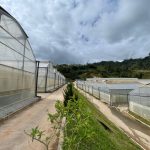
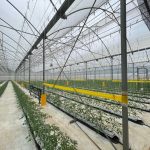
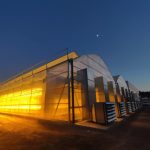
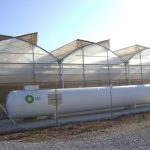
High-tech greenhouses for hot and arid climates
A high-tech greenhouse must be designed as a coordinated production system.
The structure, covering, ventilation, screens, cooling, irrigation and automation directly influence each other.
For Saudi projects, the engineering process may evaluate:
Greenhouse height and internal air volume
Greater internal volume can help reduce abrupt climate fluctuations and improve the distribution of temperature and humidity.
Height must nevertheless be coordinated with structural loads, ventilation design, crop system and installed equipment.
Roof and side ventilation
Natural ventilation must be calculated according to greenhouse geometry, external wind conditions, crop density and the expected internal heat load.
Simply increasing the number of vents does not guarantee an adequate climate. Their position, opening capacity and interaction with screens must also be evaluated.
Shading and radiation management
Solar radiation is essential for crop growth, but excessive radiation can increase crop temperature, transpiration and cooling demand.
External or internal shading strategies can be incorporated according to crop requirements and seasonal conditions.
Evaporative cooling
Pad-and-fan systems, fogging or other evaporative strategies may be considered when external temperature and humidity conditions allow them to operate effectively.
Cooling capacity must be calculated rather than selected as a standard package.
Air circulation
Recirculation fans can help improve air movement and reduce climatic differences between greenhouse areas.
Their number and position should be coordinated with the structure, crop and ventilation strategy.
Climate screens
Shading and thermal screens can contribute to radiation control, energy management and crop protection.
Screen permeability and movement must be considered when calculating ventilation.
Climate computers and sensors
Automation allows ventilation, screens, cooling, irrigation and other systems to respond to real-time climatic conditions.
The control strategy may use information from:
- External temperature
- Internal temperature
- Relative humidity
- Solar radiation
- Wind
- Rain
- substrate moisture
- Electrical conductivity
- Drainage
- Water consumption
- Crop-zone sensors
Technology creates value when the sensors, equipment and operating strategy are properly coordinated.
Water-efficient irrigation and fertigation
Water management is one of the central engineering decisions in a Saudi greenhouse project.
The irrigation system may integrate:
- Raw-water storage
- Filtration
- Reverse osmosis when required
- Water disinfection
- Fertiliser preparation
- Automated fertigation
- Irrigation sectors
- Pressure and flow control
- Substrate irrigation
- Drainage measurement
- Drainage collection
- Treatment and recirculation
- Water-quality monitoring
The system must be designed according to the crop, water analysis, growing medium, irrigation frequency and required drainage strategy.
A modern greenhouse does not become water-efficient automatically. Efficiency depends on correct hydraulic design, accurate dosing, suitable emitters, monitoring and operational control.
Hydroponic and soilless cultivation systems
Soilless production can be considered when the project requires more precise management of the root zone or when local soil conditions create limitations.
Depending on the crop, the project may incorporate:
- Substrate bags
- Pots or containers
- Elevated crop gutters
- Ground drainage channels
- Hanging gutters
- Hydroponic benches
- NFT channels
- Mobile gutter systems
- Drainage recovery
- Nutrient-solution recirculation
The selected system must respond to crop physiology, labour strategy, required plant density, water quality and production objectives.
J. Huete Greenhouses can coordinate the growing system with the greenhouse structure, irrigation, drainage and climate-control strategy.
Greenhouse crops with potential for professional projects
Each crop requires a different combination of structure, equipment and climate strategy.
Tomato
Professional tomato projects may require tall structures, high-wire crop support, substrate cultivation, drainage collection, precise fertigation, cooling, air circulation and climate automation.
Cucumber and pepper
Cucumber and pepper production requires careful control of temperature, humidity, radiation and irrigation uniformity, particularly during periods of high evaporative demand.
Strawberry and berries
Berry projects may use protected tunnels, multitunnel greenhouses, raised substrate systems, crop gutters, shading and crop-specific irrigation.
Lettuce and leafy greens
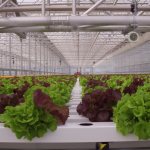
Leafy-green projects may incorporate hydroponic systems, benches, NFT gutters, mobile gutters, cooling, lighting and highly automated crop movement.
Herbs
Fresh herb production can require precise temperature, irrigation, hygiene and post-harvest coordination to achieve consistent commercial quality.
Seed production and research
Seed companies and research organisations may require independent compartments, strict pest exclusion, precise climate zones, lighting, blackout screens and specialised irrigation systems.
CAPEX and OPEX must be evaluated together
A greenhouse project should not be selected solely based on the lowest initial quotation, as the real value of the investment is determined by its long-term performance and operational sustainability. The decision-making process must take into account both capital expenditure and operating costs over the entire lifecycle of the facility.
Capital expenditure typically includes all initial components required to bring the project into operation, such as site preparation, civil works, foundations, greenhouse structure, covering systems, climate control equipment, irrigation and fertigation infrastructure, water treatment systems, electrical installations, automation technologies, lighting when required, technical buildings, packing and logistics areas, as well as assembly and commissioning activities.
Operating expenditure, on the other hand, covers the ongoing costs necessary to maintain production, including electricity consumption, cooling demand, water treatment and usage, fertilisers, labour, routine maintenance, spare parts, cover replacement over time, cleaning operations and technical support services.
An approach focused only on reducing initial investment by undersizing the greenhouse or its systems can lead to significant production limitations and higher costs in future modifications or upgrades. Conversely, oversizing all systems without a clear agronomic justification may unnecessarily increase both investment and operational complexity without delivering proportional benefits in crop performance.
For this reason, our engineering methodology is based on achieving a balanced design that aligns environmental control requirements with expected production targets and long-term operating efficiency.
Our greenhouse project process in Saudi Arabia
1. Initial project qualification
We collect the essential information required to understand the proposal:
- Location
- Crop
- Surface area
- Production objective
- Available land
- Water source
- Water analysis
- Energy availability
- Required technology
- Expected schedule
- Expansion plans
2. Climate and feasibility assessment
The technical team reviews the site conditions, climate, crop requirements and main project constraints.
This phase determines which additional studies are required before preparing the concept.
3. Conceptual design
We define the initial greenhouse type, layout, orientation, climate strategy, irrigation concept and principal equipment.
The objective is to align the technical solution with the business model before detailed engineering begins.
4. Detailed engineering
The project is developed through structural calculations, civil drawings, equipment layouts, hydraulic calculations, electrical architecture and control-system definition.
5. Scope and commercial proposal
The proposal identifies the technical specifications, included systems, responsibilities, exclusions, logistics, installation and estimated project schedule.
6. Manufacturing
The greenhouse components are manufactured according to the approved project specifications and prepared for international shipment.
7. Logistics and construction
Materials are packed, identified and delivered according to the planned installation sequence.
Civil works, assembly and equipment installation are coordinated according to the agreed scope.
8. Testing and commissioning
Ventilation, screens, irrigation, cooling, sensors, electrical systems and automation are tested before operational handover.
9. Training and support
The client’s team receives the operating documentation and the training included within the project scope
Why choose J. Huete Greenhouses?
Project-specific engineering
We do not start with a standard greenhouse and attempt to adapt the project afterwards.
The structure and equipment are defined according to the site, climate, crop and production strategy.
Manufacturing capacity
Structural manufacturing is coordinated with the project engineering, reducing inconsistencies between drawings, components and installation.
Integrated project scope
The greenhouse, irrigation, climate systems, automation, electrical installations and technical areas can be coordinated under one project strategy.
International project experience
J. Huete Greenhouses develops agricultural facilities for different countries, crops and climatic conditions.
This experience is particularly relevant when engineering, logistics and installation must be coordinated across international markets.
Large-project orientation
Our commercial and technical structure is primarily focused on professional greenhouse facilities and multi-hectare agricultural projects.
One technical interlocutor
An integrated approach reduces the number of interfaces between independent suppliers and helps clarify responsibilities throughout project execution.
Greenhouse structures available for Saudi projects
The appropriate greenhouse structure depends on the crop, climate and required level of control.
High-tech plastic greenhouses
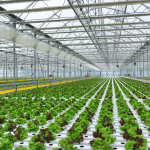
Professional plastic greenhouses can combine large internal volume, roof ventilation, double inflated covering, screens, cooling, irrigation and automation.
They can offer a suitable balance between investment and climate-control capacity for many large-scale horticultural projects.
Glasshouses
Glasshouses may be considered for facilities requiring high durability, advanced climate control and intensive year-round production.
Their suitability must be evaluated against local cooling demand, investment, maintenance and energy strategy.
Multitunnel greenhouses
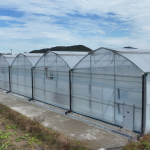
Multitunnel structures can be adapted to vegetables, berries, nurseries and different levels of climate equipment.
Macrotunnels
Macrotunnels may provide a lower-investment protection solution for selected crops, particularly where full environmental control is not required. The structure should only be selected after the production model has been defined.
Large greenhouse projects developed in phases
Agricultural investments do not always need to be constructed in one phase.
A project can be master-planned to allow:
- Initial production module
- Future greenhouse blocks
- Expansion of water storage
- Additional fertigation capacity
- Larger cooling installations
- New technical buildings
- Additional packing capacity
- Extension of electrical infrastructure
- New crop areas
Planning future expansion from the beginning prevents the first phase from limiting later development.
Frequently asked questions
What is the minimum project size?
J. Huete Greenhouses is primarily oriented towards professional and large-scale greenhouse developments. Projects of approximately one hectare or more are generally better aligned with our engineering and execution model, although each opportunity is assessed individually.
Does J. Huete Greenhouses build greenhouses in Saudi Arabia?
J. Huete Greenhouses develops international greenhouse projects and can study agricultural facilities planned for Saudi Arabia. The final scope depends on the project location, size, crop, technical requirements and execution model.
Can you deliver a turnkey greenhouse project?
Yes. Depending on the project and location, the scope can include engineering, manufacturing, civil works coordination, assembly, climate equipment, irrigation, automation, electrical installations and commissioning.
Can the greenhouse be designed for year-round production?
A facility can be designed to extend the production calendar or target year-round production, but feasibility depends on the crop, climate, cooling capacity, water, energy and operating strategy.
Which greenhouse is best for Saudi Arabia?
There is no single greenhouse model suitable for every Saudi project. The correct solution depends on the city, crop, growing system, production period, water quality and required level of environmental control.
Can you include cooling systems?
Yes. Cooling strategies may include ventilation, shading, evaporative cooling, fogging and air circulation. Their suitability and capacity must be calculated for the location and crop.
Can you include irrigation and water treatment?
Yes. Projects may include storage, filtration, reverse osmosis, disinfection, fertigation, drainage collection and recirculation.
Can a project be built in several phases?
Yes. The site layout and principal infrastructure can be designed to support future expansion.
How long does a greenhouse project take?
The schedule depends on engineering, project size, civil works, equipment, manufacturing, shipping, permits and installation conditions. A reliable programme can be prepared once the scope has been defined.
What information is required to receive an initial assessment?
The most useful starting information is the project location, crop, approximate surface area, water source, available energy, expected production period and required systems.
Selected international greenhouse experience
High-technology horticultural greenhouse for a global seed company
Tomato greenhouse for a large European company
Start the assessment of your greenhouse project in Saudi Arabia
A useful technical proposal requires more than the required number of hectares.
Tell us below about the location, crop, production objective, available resources and expected level of technology.
Our team will evaluate the initial information and determine the next technical step.